Introducing Otim Orchestrators: Webhooks for Money
The first programmable stablecoin routing primitive. One address, any asset, any chain, any destination. Turn complex money flows into a single transfer.

Julian Rachman

We've been talking about why orchestration matters. Today, we're shipping the infrastructure to make it real.
Otim Orchestrators are live. They're the first programmable stablecoin routing primitive that lets developers turn complex, multi-step money flows into a single transfer.
One address, any asset, any destination, few lines of code.
What's an Orchestrator?
Think of Orchestrators as webhooks for money. You define where you want funds to end up (a yield vault, a bank account, a settlement currency on a specific chain) and Otim generates a unique address. Send any asset to that address, and it automatically routes and transforms on autopilot.
No more stitching together swaps, bridges, and off-ramps. No more monitoring transactions or handling failures manually. The Orchestrator handles it.
Here's what that looks like in practice:
Auto-earn
Many of today's financial platforms that have stablecoin user balances sit idle in wallets, earning nothing. With Orchestrators, you create an address that automatically routes incoming deposits into yield-generating vaults. Users send USDT but the vault only accepts USDC? The Orchestrator handles the conversion. Funds hit the address, yield starts accruing: no manual steps, no transaction babysitting.
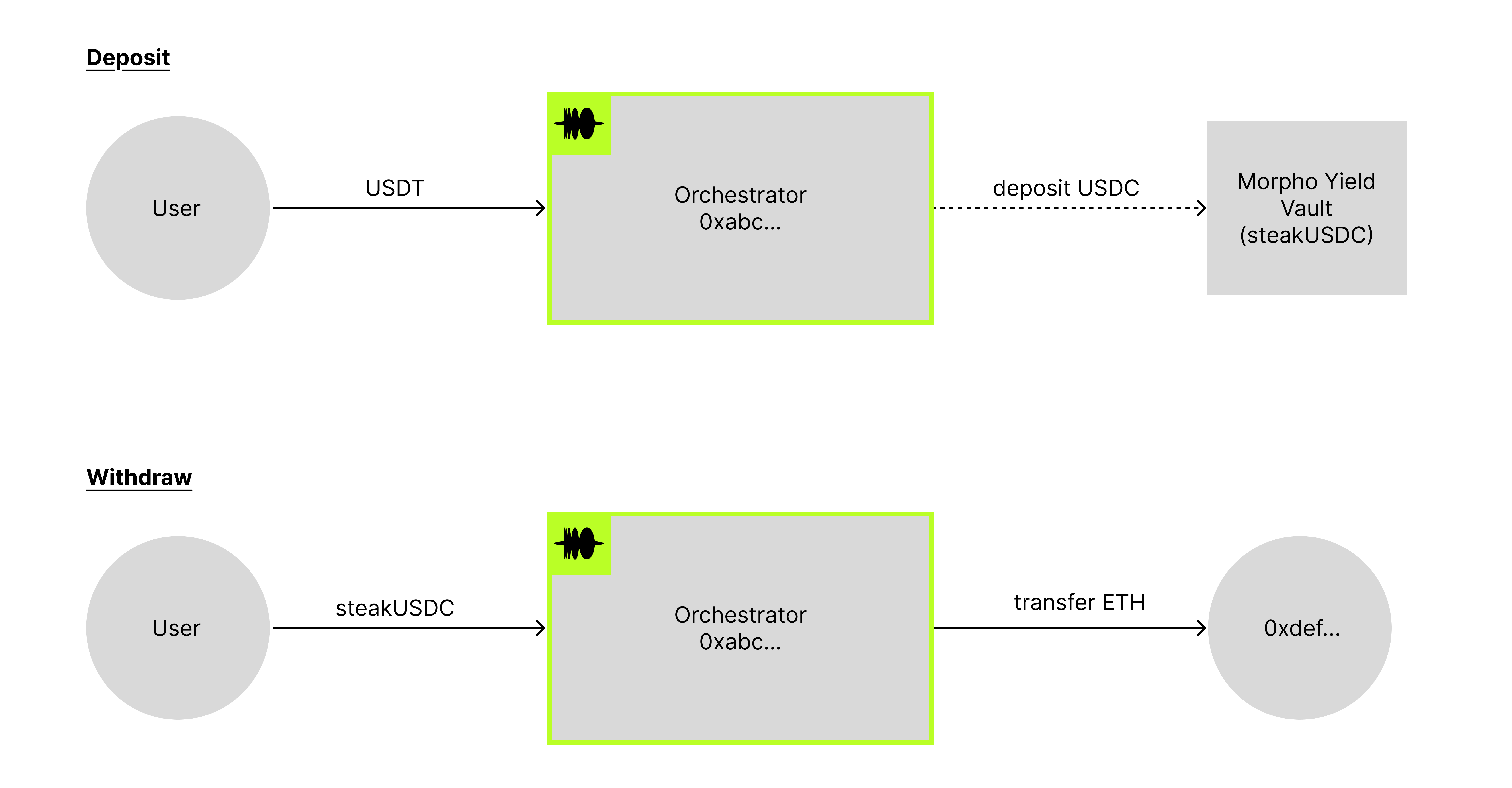
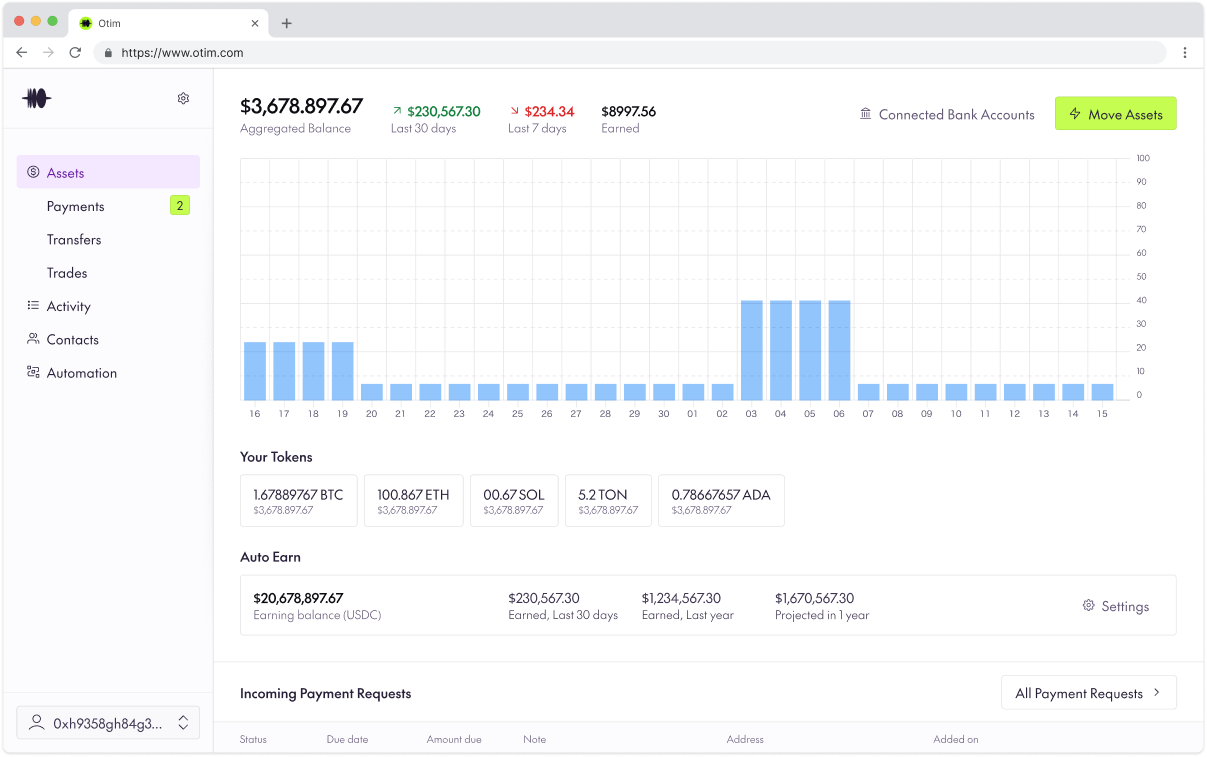
We built the Otim App's auto-earn feature entirely on Orchestrators. Deposit any stablecoin and it automatically routes into yield. Your balance always stays represented as USDC, so it's always actionable. Earn yield and stay liquid.
Fiat orchestration
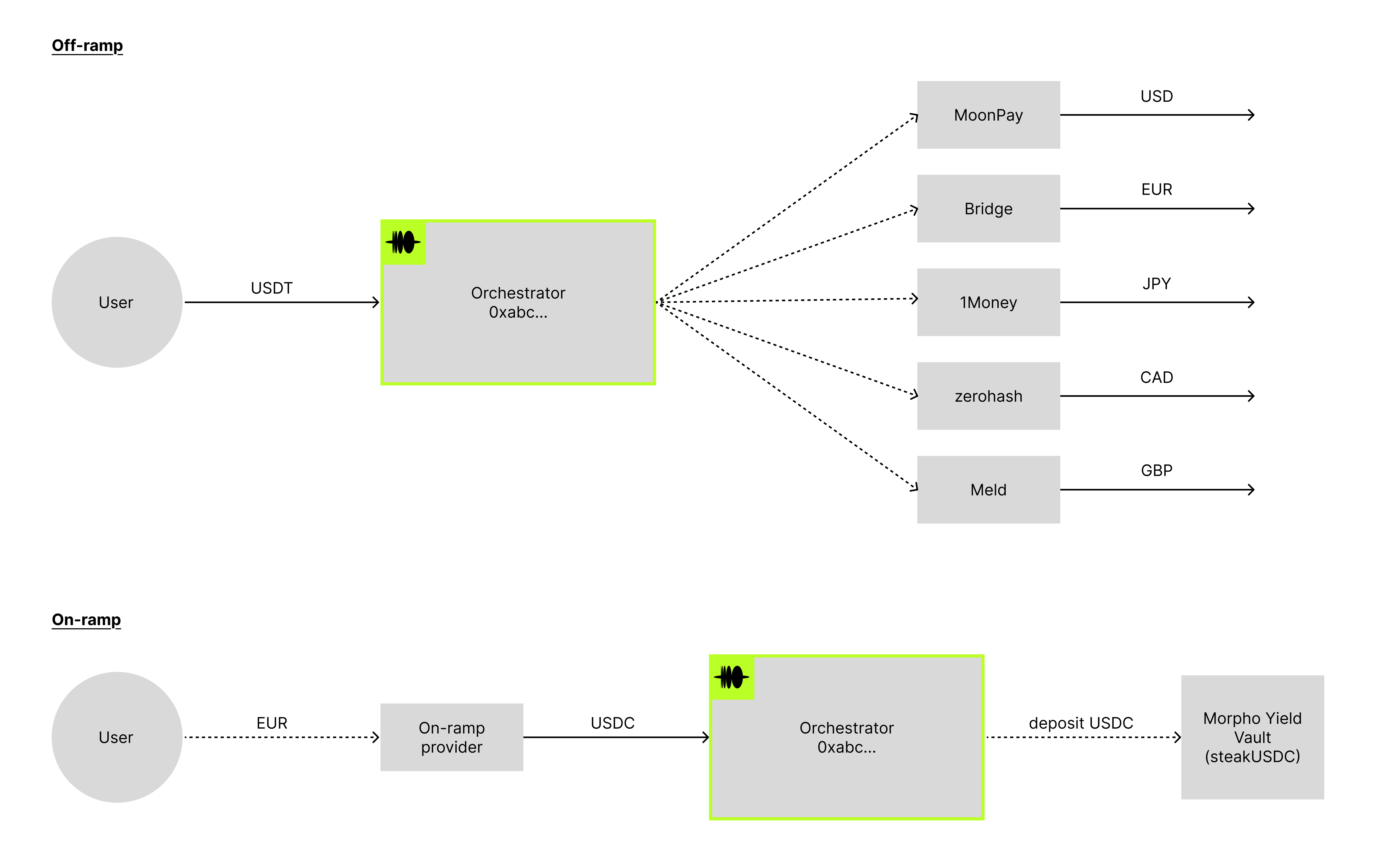
Accept crypto and automatically convert to bank-acceptable formats across local currencies and banking partners. The Orchestrator handles converting any digital asset to fiat, accepting assets from any chain, and settling to traditional banking partners. This also includes orchestrating assets immediately when on-ramped funds land.
Cross-chain payment settlement
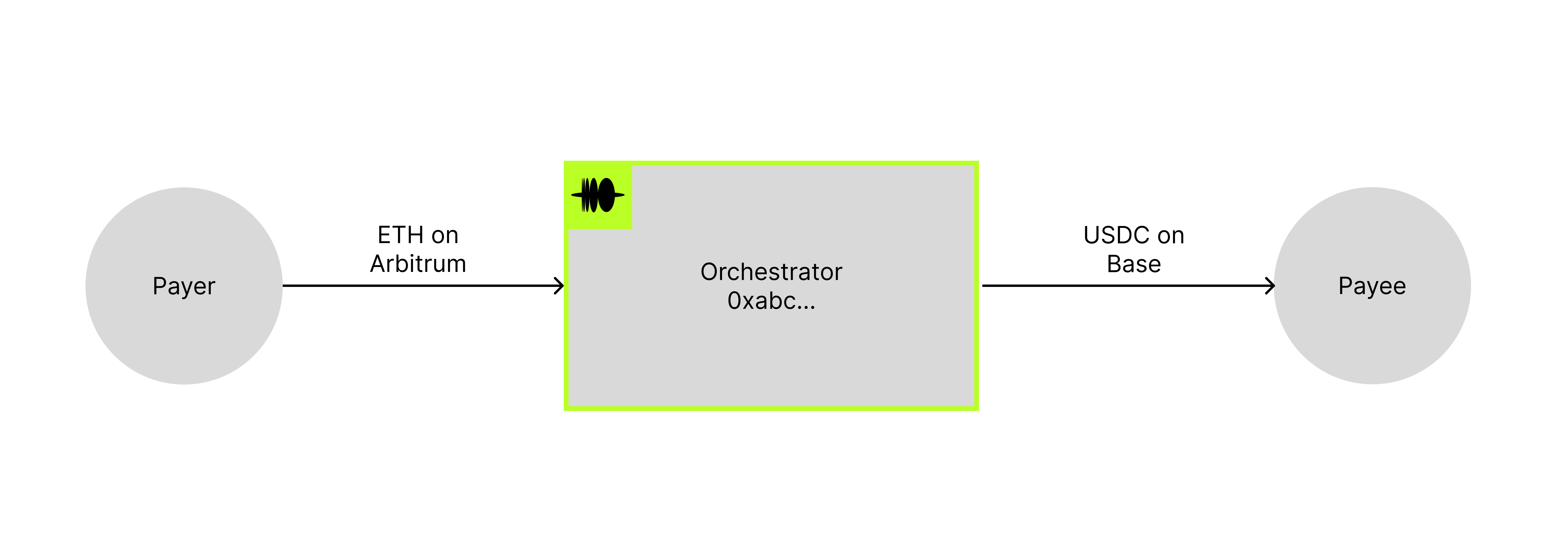
Accept ETH on Arbitrum, automatically bridge to Base, convert to USDC, and settle to your treasury, all from a single inbound transfer.
Built for Developers
We're releasing SDKs in both Go and TypeScript, so you can integrate Orchestrators into whatever stack you're running.
Creating an Orchestrator is super easy:
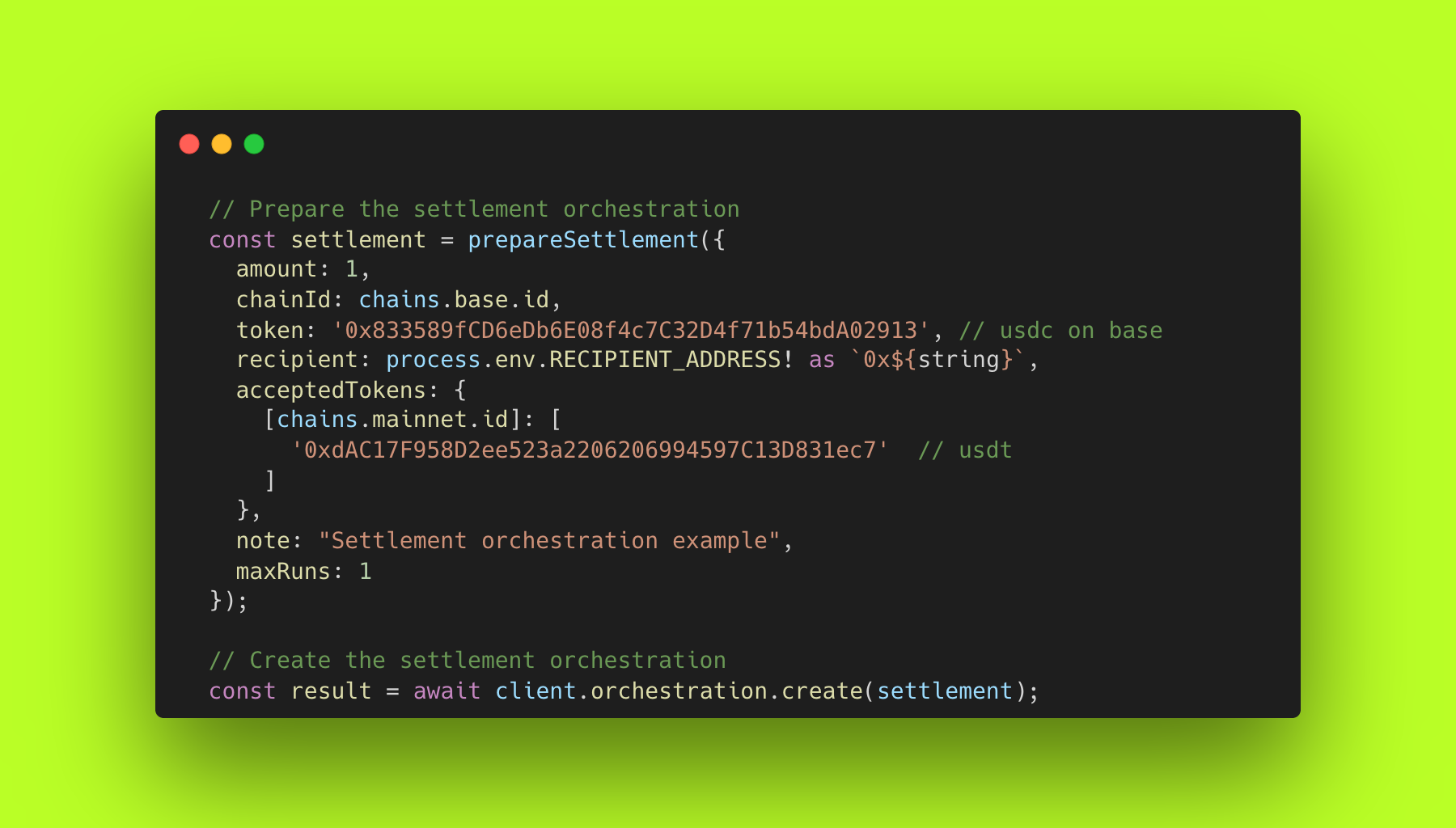
Configure them for one-time use or make them persistent. Every Orchestrator is non-custodial with trustless execution and built-in compliance.
Why This Matters
Stablecoins are eating payments. But the operational complexity of actually using them (bridging, swapping, gas management, failure handling) has kept enterprises on the sidelines.
We wrote about this in our piece on stablecoin orchestration: the blockers aren't technical, they're operational. The chains are fast enough. The rails exist. What's missing is the coordination layer that makes stablecoin flows as simple as traditional payment rails.
Orchestrators are that layer. They let you build auto-earn, automated billing, treasury yield strategies, and cross-border settlement without managing the underlying complexity yourself.
Get Started
We're onboarding developers now. If you're building a financial platform or app that moves value with stablecoins (payments, treasury, remittance, payroll) and/or your user's balances are just sit idle, we want to talk.
Orchestration is the name of the game.